
Centre directs states to set up special courts to deal with 3.9 lakh pending drug cases
Punjab, with 60,000 pending cases, does not have a special NDPS court and Kerala, with a backlog of 50,000 cases, has only two.

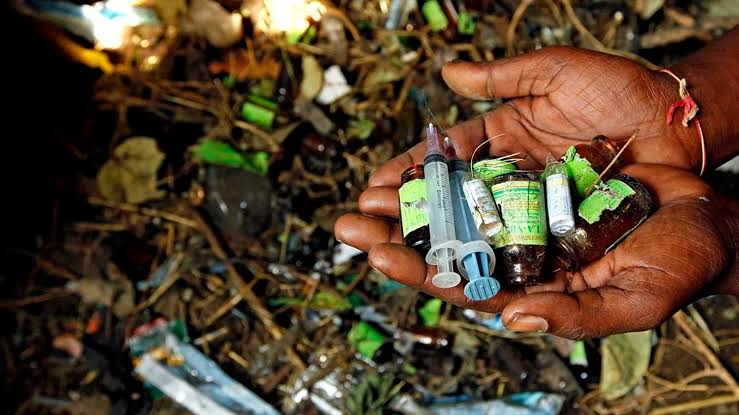
The Ministry of Home Affairs has called upon all states and Union Territories to set up exclusive courts for narcotics cases with around 3.96 lakh cases pending across the country under the Narcotic Drugs and Psychotropic Substances (NDPS) Act. The direction came after the MHA was informed in a meeting that 22 states have not yet set up special NDPS courts.
The Union Home Ministry has had several meetings with chief secretaries and home secretaries of states and UTs in the last six months on the establishment of special NDPS courts to deal with the heavy pendency of cases.
The Punjab government has about 60,000 pending NDPS cases, but no exclusive special court, a meeting last month found. The MHA has recommended establishing five special NDPS courts in Ludhiana, Jalandhar, Amritsar, Tarn Taran and Sangrur, a source said.
“There were only two special courts in Kerala against the suggested nine and about 50,000 pending cases. “Odisha, which has around 17,000 pending cases, said at the meeting that eight special courts would be set up this year and seven in 2027-28,” the source said.
At the meeting the Narcotics Control Bureau gave a presentation about Narcotics Control Bureau courts that handle Narcotics Control Bureau cases and the steps that need to be taken to speed up Narcotics Control Bureau trials. The source said that the Narcotics Control Bureau told them that now there are only 65 special courts, in all of India that are working to deal with Narcotics Control Bureau matters.
In the meeting the Supreme Court was worried about how it takes to finish trials for narcotics cases. People talked about how cases that involve a lot of people like when many people are accused of doing something with drugs and there are many witnesses and lawyers can take a very long time to figure out. This is because there are questions to ask and many people to talk to so it gets very complicated. That is why we need courts that can just focus on these kinds of cases instead of using the regular courts that are already busy.
The government asked all the states to tell them how they are doing with setting up courts just for narcotics cases like the Supreme Court told them to do. They also asked some people from the Home Ministry and the Narcotics department to meet with the people in charge of the high courts, in the states where a lot of narcotics cases are still waiting to be finished the person said.
Setting up NDPS courts and working to speed up trials is part of the Union government’s plan to fight drug-trafficking and substance abuse for the next three years. “During the conversation it was mentioned that pre-trial meetings could be used by trial courts – to how things are handled in constitutional cases before the Supreme Court where time limits are set and both sides are expected to follow them ” the source said.
From 2004 to 2014 there were 1,73,000 drug-related cases and 1,95,000 people were arrested. “From 2014 to 2026 the number of cases went up to 8,75,000 and 10,97,000 people were arrested ” an official said.
In terms of states the number of cases that are still waiting to be handled is very high. Tamil Nadu has 15,000 cases that are still pending and only five special courts. Officials from the state mentioned that six special NDPS courts are being planned. Karnataka has 15,000 pending cases and three special courts so it was suggested that more special courts be created. Madhya Pradesh has 14,000 pending cases and no special court at all so it was asked to quickly create six NDPS courts in places like Indore, Bhopal, Neemuch, Mandsaur, Rewa and Singrauli the source said.
West Bengal has 11,000 cases that are still pending and no special court for drug-related matters. It was suggested that six special courts be created in places such, as Kolkata, Howrah, East Bardhaman, Barasat and Berhampore.
In Himachal Pradesh, there are around 11,000 pending cases and yet no special court. “State officials said that there was a proposal for setting up five special courts, but it was not accepted by the high court yet. The MHA asked them to send the proposal to the high court again,” the source added.
During the 10th apex-level meeting of the Narco-Coordination Centre in June, Union Home Minister Amit Shah had said, “We are geographically situated between the Death Triangle and the Death Crescent. Drug-traffickers have made our fight even more challenging by adopting advanced methods. Along with drug-trafficking, organised crime, narco-terror financing and the funding of cross-border terrorist networks, this problem has also evolved into an evolving narco-terrorism ecosystem. For the internal security of our country, the protection of our economy, and the future of our youth generation, we must achieve complete victory over this menace.”