

Scientists May Have Captured the First Clear Evidence of Dark Matter
A new analysis by University of Tokyo professor Tomonori Totani suggests that a mysterious gamma-ray glow at the center of the Milky Way could finally point to the long-theorized dark matter particles

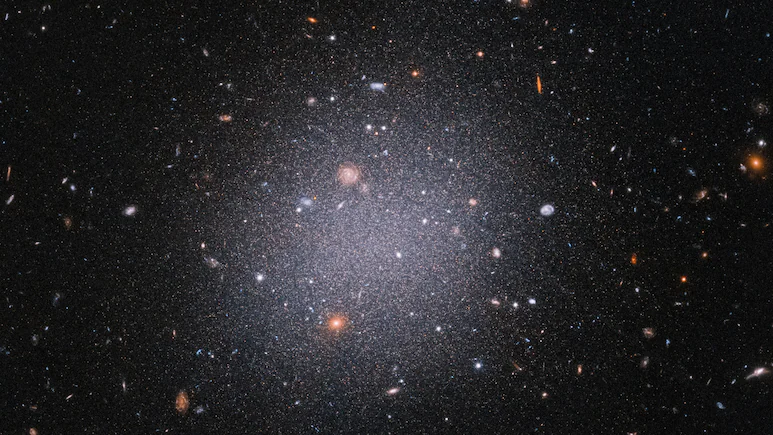
Could This Be Humanity’s First Glimpse of the Invisible Universe?
With detailed observations from NASA’s Fermi Gamma-ray Space Telescope, researchers believe they may have detected dark matter directly for the first time. The finding could possibly rewrite the understanding of the Universe and physics itself.
This study analyzed data taken over eight years from the dense central region of the Milky Way, where dark matter would theoretically be most concentrated. Researchers observed a halo-like gamma-ray emission at approximately 20 GeV, consistent with decades-old predictions for theoretical particles called Weakly Interacting Massive Particles, or WIMPs.
According to existing theories, the collision or annihilation of two WIMPs is expected to produce high-energy gamma rays-a signature scientists have been trying to identify for decades. The signal identified in the Fermi data resembles this expected pattern so closely that it raises hopes among the researchers that, at last, they might be witnessing the indirect footprint of dark matter.
Confirmation would make it the most compelling evidence of dark matter’s existence for humanity to date-but not by any direct detection, rather through the energetic light it may leave behind. It could also hint at a completely new particle outside of the Standard Model of physics, making it one of the biggest discoveries since the Higgs boson.
Yet scientists urge caution: Other explanations, including emissions from dense populations of stars or other unusual cosmic objects near the galactic core, have not yet been ruled out. Much more research and independent verification will be needed to confirm dark matter’s long-awaited detection.